




18 December 2025
Written by: Tiina Ynnilä, UEF
Photos by: Irene Raminez, NOVA – Elina Oksanen & Tiina Ynnilä, UEF
In early September 2025, ᴇNᴀBʟS’ team from the University of Eastern Finland (UEF) had the pleasure of hosting Portuguese doctoral researcher Irene Raminez from NOVA University of Lisbon for a research visit. Irene studies the implementation of Nature-Based Solutions (NBS) in agriculture and conducts her field studies in Portugal, Spain, and Finland. She is interested in what motivates farmers to adopt sustainable cultivation practices.
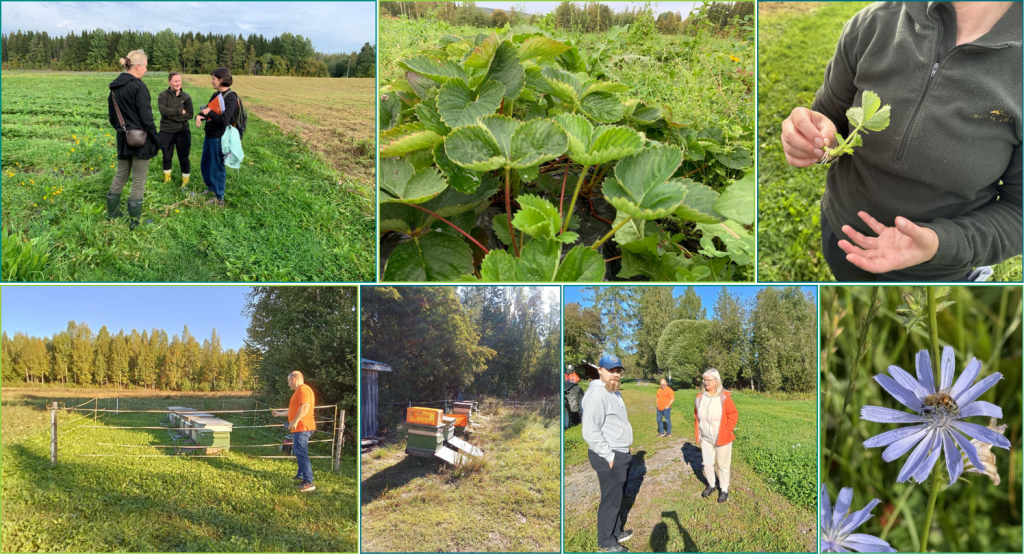
Bee farm visit in North Karelia
University Teacher Oskari Ylikoski welcomed Irene at the Joensuun campus, and together they made a farm visit to the eastern border of Värtsilä, where farmer Veijo Mantsinen showed them his organic Mantsisen Hunaja bee farm. Currently, he cultivates red clover, which is an important nitrogen-fixing plant. The visit was organised by Anneli Salonen, Research Specialist at the Finnish Beekeepers’ Association.
After the farm visit, Anneli invited them to her home in Tuupovaara. For Irene, it was a great experience to see an old small Finnish farm — one that traditionally combines animal husbandry and forestry. Even though there are no cows on the farm anymore and bee gardens are a hobby, the visit to this traditional landscape was memorable.
Berry farm visit in North Savonia
From Joensuu, Irene travelled to Kuopio, where Professor Elina Oksanen and Continuous Learning Specialist Tiina Ynnilä met her and drove to Kolarinpelto berry farm in Leppävirta. Farmers Noora Räsänen and Janne Räsänen, both holding doctoral degrees from the UEF Environmental and Biological Sciences, introduced their farm. Noora explained that they cultivate strawberries and raspberries in open fields and, more recently, have begun producing honeyberries on a smaller scale. Their farm also includes beekeeping, with hives placed on the edges of their own and neighbouring berry fields.
There are several NBS used on their farm. The Räsänens cultivate in the open field, and crop rotation is one of the most important ways to maintain good soil health and biodiversity. With the help of beehives, they can biologically prevent Botrytis cinerea in strawberries. By keeping flowering plants in crop rotation, they can secure nectar sources for bees and especially natural pollinators. They use cover plants in strawberry cultivation to protect the soil, retain moisture and control weeds. Recently they tested local strawberry seedlings that were produced at the strawberry laboratory of Harri Kokko’s group at the UEF Environmental and Biological Sciences.


10 November 2025