



27 November 2025
Written by: Birthe Uhlhorn, BOKU
Read also in:

Children Create Habitats for People and Animals
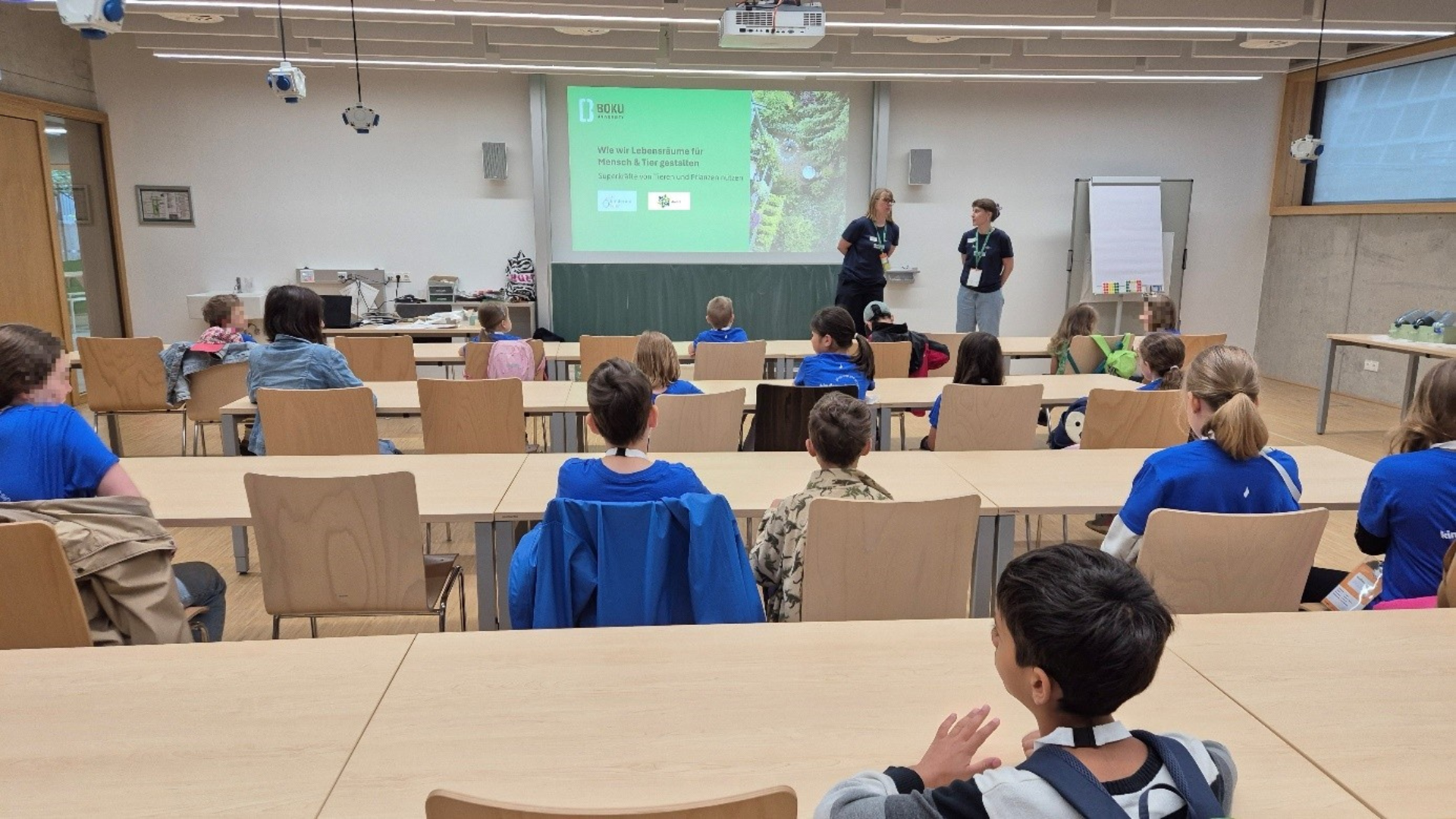
On 8 July 2025, ᴇNᴀBʟS’ Austrian Living Lab (coordinated by BOKU and 3s) hosted a children’s university workshop at the BOKU University focusing on holistic spatial planning. Open spaces must be more than concrete and asphalt—they need to meet the needs of all living beings so we can fully harness the “superpowers” of plants and animals. These include the pollination services provided by bees and other insects, as well as the cooling effect of trees, which also improve air quality. Without these ecosystem services, our cities would be hotter, drier, and far less liveable: pollination secures our fruit and vegetable harvests, plants and trees keep urban temperatures bearable in summer, and healthy soils prevent flooding while protecting our drinking water.
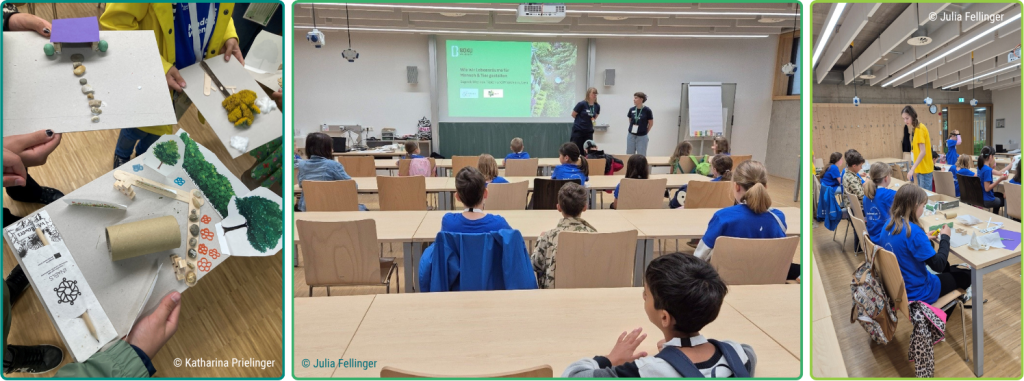
During the workshop, 7- to 9-year-olds stepped into the roles of bees, bats, earthworms, hedgehogs, kestrels, and squirrels. Through simple experiments, they learned which materials meet each animal’s specific needs. They discovered that a healthy soil layer—with moss and plant cover—filters rainwater, stops erosion, and simultaneously provides food, shelter, and habitat.
Armed with these insights, the children sketched on paper how a grey courtyard could be transformed into a flourishing oasis. They then brought their designs to life—at least in miniature form: in their models, they created dedicated zones for feeding, shelter, and nesting. Their very own mini biotope vividly demonstrated how even the smallest areas can become vibrant habitats for people and animals using just a few simple measures.


27 November 2025
10 November 2025